
How to Write Website Content That Converts (a 2026 Guide for Business Owners)
Design gets the credit, but the words do the selling - and research shows visitors read barely 20% of them. Here is the practical playbook: the hero formula, page-by-page structures, writing rules that survive scanning, SEO without ruining the copy, and the honest role of AI.
 Ali RehmanFull Stack Web Developer
On this page 8 sections
Here is an uncomfortable truth about websites: the design gets all the credit, but the words do the selling. Visitors do not convert because your gradient looks premium - they convert because a sentence answered their question at the exact moment they asked it. And yet the words are the part business owners write last, at midnight, straight into the builder, after months of debating button colors. Nielsen Norman Group's classic research found that users read roughly 20% of the text on an average page and 79% scan rather than read - which means your copy is not competing for readers. It is competing for scanners with their hand on the back button.
There is a second cost to treating copy as an afterthought: it is the number one cause of website project delays - the "we'll write it as we go" trap I documented in the website timeline guide. This article solves both problems at once: a practical, page-by-page playbook for writing content that converts scanners into inquiries, written for business owners doing it themselves - with the same conversion logic I apply in client builds as a freelance web developer.
Why Most Website Copy Fails (Three Patterns)

Pattern one: it is about you, not them. Count the "we/our" versus "you/your" on your homepage. Most business sites fail this ratio badly - "We are a leading provider committed to excellence" - while the visitor is silently asking one question: what is in this for me? Copy that converts flips the camera: every claim rephrased as the customer's outcome. Explain the intended benefit, such as "help visitors reach your services and enquiry form with less waiting." Only claim a particular loading time or reduction in abandonment when you have relevant measurements, and state the test conditions.
Pattern two: jargon as a security blanket. "Synergistic solutions," "end-to-end digital transformation," "leveraging cutting-edge technologies" - insider language feels professional to the writer and means nothing to the buyer. The test: would your customer say this sentence out loud to a friend? If not, it is costing you conversions. The most persuasive copy on any website is usually a plagiarized customer - their words, their phrasing, their complaints, mirrored back at them.
Pattern three: features without outcomes. "Responsive design, SSL certificate, CMS integration" - true, and emotionally inert. Buyers do not purchase features; they purchase the after-state: more inquiries, fewer headaches, a site they are not embarrassed to put on a business card. Features earn their place only as proof of the outcome, never as the headline. This is the same leak I profiled in how websites quietly lose customers - the traffic arrives, the words fail, the visitor leaves politely and permanently.
Before You Write: Answer Three Questions
Copy fails at the strategy layer before the sentence layer. Ten minutes on paper first: (1) Who exactly is this page for? "Everyone" produces beige. A page written for "small service businesses tired of a website that produces nothing" cuts deeper than one written for "businesses." (2) What problem brings them here? Not your service - their situation the moment before they searched. People do not want a website redesign; they want to stop losing customers to a site that embarrasses them. (3) Why you, honestly? One believable differentiator beats five generic ones - fixed quotes, written updates, a niche, a guarantee. If the honest answer is "nothing yet," that is a business problem no copywriting can paint over - and discovering it now is a gift.
The Page-by-Page Playbook

Homepage: Pass the 5-Second Test
A stranger landing on your homepage should answer three questions within five seconds: what do you do, who is it for, what should I do next. The hero formula that reliably passes: [what you do] for [who] - [the outcome that matters], plus one primary button. Mine reads "fast, modern websites that turn visitors into customers" - not because it is poetry, but because it survives scanning. Below the hero, sequence the scanner's natural questions: proof (real work, real numbers), services in scannable cards, how working together feels, and the call-to-action again. Every section either builds belief or asks for action - anything else is decoration. The deeper conversion mechanics are in the lead generation guide; the words are what make those mechanics fire.
Service Pages: One Page, One Service, One Reader
The single biggest copy upgrade for a service business: stop cramming everything into one "Services" page. Each service deserves its own page targeting its own search intent - the silo structure from the technical SEO checklist - written to one reader with one problem. Structure that converts: open with their problem in their words (the moment before they searched), agitate briefly (what it costs to leave unfixed), present the service as the specific fix, prove it (real examples, outcomes, process), answer the 3-5 objections you hear in every inquiry, then one clear next step that accurately explains what happens next. A specific CTA such as "request a written quote" may be clearer than "contact us", but test it with your own audience. Promise a response time only if you can reliably meet it; no wording wins every test.
About Page: It Is Not Actually About You
The about page is usually the second-most-visited page on a small business site - because buyers are running a trust check, not requesting a biography. Structure it as: who you help and what changes for them, then the honest story (real experience, real numbers, no invented awards), a face and a name (people buy from people - this is EEAT working in your favor with Google too), how you work (process reduces perceived risk), and a call-to-action, because trust peaks at the bottom of this page and most sites waste it. First person beats corporate third person for solo businesses: "I build" reads human; "we are a team of passionate experts" reads like a stock photo.
Contact Page: Remove Fear, Set Expectations
The highest-intent page on the site gets the least copy attention. Three sentences fix it: what happens after they hit send ("you will get a written reply within 24 hours"), what they will receive ("a plain-language plan and a fixed quote"), and what they will not ("no calls unless you want one, no spam, no pressure"). Fear of the unknown - endless sales calls, spam lists - kills form submissions silently. Naming and removing that fear is worth more than any redesign of the form itself.
Writing Rules That Survive Scanning
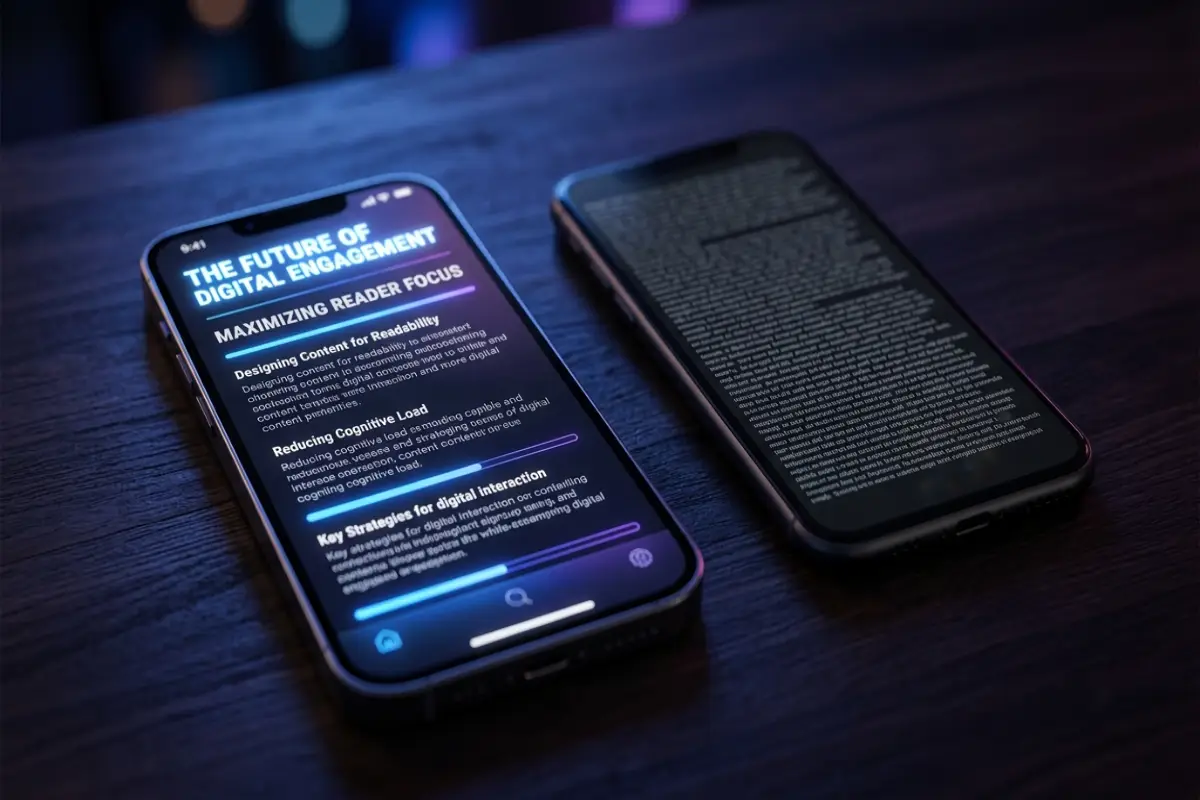
- Front-load every element. First words of headlines, first sentences of paragraphs, first items of lists carry the message - scanners rarely reach the ends.
- One idea per paragraph, 1-3 sentences. Walls of text are skipped whole. White space is not empty; it is pacing.
- Make specific claims you can support. Explain response times, scope and price assumptions only when they reflect your actual service. The website cost guide shows how to discuss budget factors; its presence is not evidence that it outperforms another page. Use your own analytics or a properly designed comparison before claiming a conversion improvement.
- Use verifiable evidence, not impressive-looking numbers. Project counts must come from an actual record of your role, experience claims from real dates, and speed claims from documented tests on working pages. Include the relevant timeframe and conditions. If you lack evidence, describe the process or label a hypothetical example instead of inventing precision.
- Write like you talk, then tighten. Read it aloud; every sentence you stumble over, a visitor abandons. Contractions are allowed. Starting sentences with "And" is allowed. Sounding human is the whole point.
- Make CTAs describe the next step. "Request my quote" can explain the action more clearly than "Submit", provided a quote is what the form requests. Compare completion rates and lead quality on your own site before declaring a winning label.
SEO Without Ruining the Copy
The old fear - "SEO copy" stuffed with keywords - is obsolete and counterproductive. Google's systems reward the same things human readers do: content that matches search intent, answers the question thoroughly, and is structured for comprehension. The practical rules: one primary phrase per page, used naturally in the title, first paragraph and a heading or two - then write for the human. Use headings as a table of contents (scanners and crawlers both navigate by them). Answer genuine customer questions in visible FAQ sections because they help readers make decisions. Do not promise FAQ rich results: Google retired that search feature on May 7, 2026 and removed its documentation on June 15. FAQPage markup is not a way to restore it. And interlink related pages in the body text, the way this article does - it guides readers deeper and builds the topical structure that ranks, one of the fixes covered across the visibility guide. If the copy reads worse after your SEO pass, you did the SEO wrong.
The Honest Role of AI in Website Copy (2026)

AI writes grammatically perfect, structurally sound, emotionally vacant copy - the written equivalent of a stock photo. Used lazily, it produces the exact "generic content wall" that caps AI-built websites: text optimized to exist rather than convince, indistinguishable from ten thousand competitors who typed the same prompt. Google does not penalize AI text; buyers penalize generic text, whoever wrote it.
Used well, AI is a genuine accelerator: first drafts to break the blank page, structure suggestions, headline variations, tightening bloated paragraphs, adapting one page's structure to another service. The workflow that works: you supply the raw truth - your real customers, real objections, real numbers, real voice notes - AI arranges it, and you rewrite the result until it sounds like you on a good day. The specifics only you know (the "replies within 24 hours," the real project stories, the honest prices) are precisely the parts AI cannot invent - and precisely the parts that convert.
Five Copy Mistakes That Quietly Kill Conversions
- The unclear headline. "Empowering Digital Excellence" says little about the service or audience. Start with a clear description, ask representative readers what they understood, and test alternatives when traffic supports a meaningful comparison. There is no universally winning headline formula.
- Burying the price signals. "Contact us for pricing" filters out serious buyers who just want a range. Even "projects start at $500" qualifies leads and builds trust.
- Fake urgency and inflated claims. "Limited slots!" from a freelancer with open availability, invented team sizes, borrowed portfolios - visitors detect the inflation, and one detected lie discredits every true claim on the site.
- Writing once, forever. Copy decays like everything else: services change, prices change, proof accumulates. A quarterly copy review belongs in the same routine as website maintenance - stale words cost as much as stale plugins.
- No call-to-action on content pages. Blog posts and about pages that end in silence waste their most convinced readers. Every page ends with a door - open it.
Website Copywriting FAQs
How long should website copy be?
As long as the decision requires, structured so scanners survive it. Homepages: short sections, ruthless clarity. Service pages: longer than you think - 600-1,200 words - because they must answer objections. Blog content built to rank: 1,500-2,500 words of genuine depth. Length is never the goal; completeness for the page's one job is.
Should I write my website content myself or hire someone?
Write the raw material yourself - nobody knows your customers, numbers and stories like you do - then decide: if you can self-edit with the rules above, DIY genuinely works. If the words will not come together, a copywriter or a developer who writes conversion copy shapes your raw truth faster than you will fight it. What you should never outsource is the truth itself; what you can outsource is the arrangement.
What is the most important page to get right?
The homepage hero wins on traffic volume, but the highest ROI per word is usually the service page for your most profitable service - it receives the highest-intent visitors and carries the whole objection-to-action sequence. Fix that one page completely before polishing anything else.
How do I write content for SEO and humans at the same time?
Pick the search phrase, understand the intent behind it (what does this searcher actually need?), then write the best answer on the internet for a human - with the phrase appearing naturally in the title, opening and a heading. Modern SEO and good copywriting converged years ago; the conflict only exists on sites still writing for 2015's algorithm.
How often should I update my website content?
Quarterly review, honest edit: prices current, services accurate, new proof added, dead offers removed, dates refreshed where content claims currency. Google rewards genuine freshness signals and buyers punish staleness - a site whose latest update is two years old tells every visitor the business might be too.
The words on your website are the cheapest conversion lever you own - no rebuild required, no ad budget, just clearer thinking typed out. Run the 5-second test on your homepage tonight, flip the we/you ratio, replace three adjectives with three specifics, and put an honest next step at the bottom of every page. That alone puts you ahead of most competitors. And if you would rather have a professional pass - the same conversion-copy thinking from this guide applied to your pages, with the technical layer handled too - send your URL through the contact page: written review of what your copy is costing you, fixed quote to fix it, reply within 24 hours. No calls needed - fittingly, everything in writing.
Written by
Ali Rehman - Full Stack Developer
I build fast, scalable web applications with React, Next.js, Node.js & TypeScript. Have a project in mind? Send me a message and get a written plan with a fixed quote - start here.
More articles by Ali Rehman →