
How Long Does It Take to Build a Website? Real Timelines for 2026
The honest answer: 1-3 weeks for a simple site, 2-6 weeks for a business website, 2-6 months for a custom web app. Here is the phase-by-phase breakdown, the one thing that delays almost every project, and how to keep yours on schedule.
 Ali RehmanFull Stack Web Developer
On this page 6 sections
It is the first question every client asks and the one most developers answer vaguely: how long will my website take? The honest short answer for 2026: a simple brochure site takes 1-3 weeks, a proper business website takes 2-6 weeks, an e-commerce store takes 4-8 weeks, and a custom web application runs 2-6 months. Anyone quoting dramatically less is skipping steps you will pay for later; anyone quoting dramatically more for a standard site is either overloaded or overcharging.
But the ranges only become useful when you understand what fills them - because the biggest variable in every website timeline is not the developer's typing speed. After 3+ years of building sites as a freelance web developer, I can tell you the real schedule-killer up front: content. The text, images, logins and decisions only the client can provide are the number one cause of delays on almost every project in the industry - not code. This guide breaks down the honest phase-by-phase timeline, what genuinely speeds projects up, the red flags in both directions, and the checklist that keeps your launch date intact.
Why Website Time Estimates Vary So Wildly
Ask five developers for a timeline and you will get five answers - not because someone is lying, but because "a website" describes projects that differ by 50x in scope. Five variables drive nearly all of the spread:
- Page count and uniqueness: five pages using three layouts is a different project from twenty pages of custom sections. Templated interior pages build fast; bespoke ones do not.
- Functionality depth: a contact form is hours; booking logic, payment flows, member areas and CRM wiring are weeks. Features - not pages - dominate custom timelines.
- Content readiness: the silent multiplier. Ready copy and images keep a project on rails; "we'll write it as we go" reliably adds weeks.
- Decision speed: a single decision-maker who replies within a day keeps momentum; a committee that meets fortnightly turns a 3-week build into a 3-month one without changing the site at all.
- Platform choice: an AI builder produces something in hours (with the ceilings I covered in AI builders vs developers), WordPress builds land mid-range, and custom stacks trade a little more build time for performance and ownership - the same trade-offs from WordPress vs custom websites.
Notice that only two of the five are in the developer's hands. That is the honest secret of website timelines: they are a shared responsibility, and the projects that finish on time are the ones where both sides know their part of the schedule.
The Phase-by-Phase Timeline (Business Website)
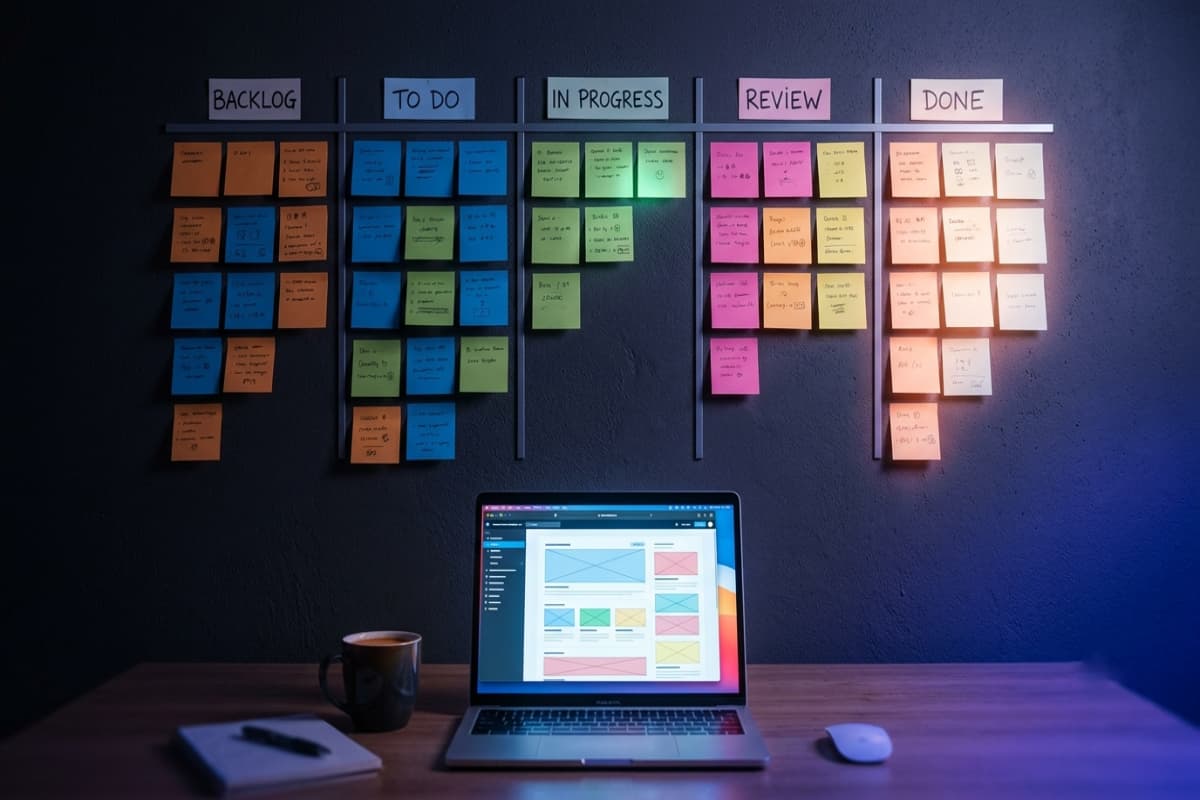
Here is where the weeks actually go on a typical 2-6 week business website, phase by phase:
Phase 1: Discovery and Scope - 2 to 5 days
What the site must achieve, who it serves, which pages exist, what functionality is included - written down. This is where fixed quotes come from, and skipping it is why projects balloon: undefined scope is infinite scope. A good developer sends you a written plan; you correct it once; both sides now share the same picture. Everything I wrote about vetting in how to hire a web developer shows up in this phase - the ones who rush past scoping are the ones who miss deadlines later.
Phase 2: Content Collection - 3 days to 3 weeks (the wildcard)
Copy, images, logos, testimonials, service details, legal pages, account access. When it is ready in week one, timelines hold. When it trickles in, everything downstream slides - design needs real content to be honest, and a build cannot finish around placeholder text. This phase runs in parallel with design, but it is the single most common critical path: industry surveys have found client content delays affect the majority of web projects. The fix is boring and effective: treat content as a launch requirement with its own deadline, not an afterthought.
Phase 3: Design - 3 to 10 days
Layout, visual direction, homepage concept, interior patterns - reviewed and approved before heavy build. Two structured feedback rounds keep this tight: consolidated comments, clear decisions, then forward. (Endless "one more tweak" loops are the second-biggest schedule killer after content.) Design decisions should serve conversion, not decoration - the principles from getting more leads from your website get baked in here, because retrofitting them later costs double.
Phase 4: Build - 1 to 3 weeks
The visible progress phase: pages assembled, responsiveness handled, forms wired, CMS configured, integrations connected. Professionals stage-demo during this phase (links you can click, not screenshots), so surprises surface early. Performance is built in here too - image optimization, clean code, speed budgets - because bolting speed on after launch is exactly the expensive rework I documented in why websites are slow.
Phase 5: Review, SEO and Launch - 3 to 7 days
Cross-device testing, form deliverability checks, redirects mapped (critical when replacing an old site - the ranking-protection work from the redesign guide), metadata and schema in place, analytics connected, sitemap submitted — the complete version is in the website launch checklist. Launch itself is an hour; the verification around it is what protects the investment. Then the site goes live - and the first 48 hours get monitored, because reality always finds something staging missed.
What Actually Delays Projects (Ranked by Damage)

- 1Missing content. The undisputed champion. A site that is 95% built cannot launch around three missing service descriptions and the team photos. Weeks die here.
- 2Feedback black holes. Every day a design or demo sits unreviewed adds a day to launch - and momentum loss compounds: a project touched daily finishes disproportionately faster than one touched weekly.
- 3Scope creep. "While you're at it, can we add..." Each addition is reasonable; the sum is a different project. Good process handles this with a simple rule: additions are welcome, written up, quoted, and scheduled - not silently absorbed.
- 4Committee decisions. Five stakeholders with veto power multiply every feedback round. One empowered decision-maker (with others consulted, not approving) is the single biggest structural speed-up available.
- 5Third-party dependencies. Waiting on domain access, hosting credentials, payment account approvals, or a logo from another vendor. Identify these in week one and start them immediately - approval queues do not care about your launch date.
How to Keep Your Website Project on Schedule

The client-side checklist that separates on-time launches from drifting ones - none of it requires technical skill:
- Prepare content before the build starts. Even rough drafts beat blank pages. Gather text, images, testimonials and access credentials in week zero.
- Appoint one decision-maker. Collect opinions from anyone; deliver decisions through one person, within an agreed window (24-48 hours is realistic).
- Consolidate feedback. One list per review round beats fourteen scattered messages - it is faster for you and eliminates contradictory instructions.
- Insist on a written scope and milestones. It protects both sides: you know what is included, the developer knows what done means, and additions get handled explicitly. This pairs with the fixed-quote approach from the website cost guide - scope and price are the same document.
- Start third-party tasks immediately. Domain access, hosting, payment accounts, business email - day one, not week three.
Projects run this way routinely land inside their estimates - the builds in my portfolio that finished fastest were not the smallest ones; they were the ones where content arrived early and decisions came from one person.
Timeline Red Flags (in Both Directions)

Too fast: "Your business website will be done in 2-3 days" almost always means a purchased template with your logo swapped in - no scoping, no content strategy, no SEO foundations, no testing. You are not buying a website; you are buying the beginning of a rebuild. The exception is genuinely simple landing pages, where days are realistic.
Too slow: a standard business site quoted at 4-6 months (without app-level functionality) signals an overloaded vendor, an agency process built for enterprises, or hourly billing incentives. Ask what fills the time - a good answer names phases and dependencies; a vague answer names the problem. Also suspicious: no questions. Any timeline offered before someone understands your pages, features and content status is a guess dressed as a promise - the estimate is only as good as the scoping behind it.
Website Timeline FAQs
How long does a simple 5-page business website take?
With content ready: 1-3 weeks from kickoff to launch with a professional. The build itself is often a week; scoping, review rounds and launch checks make up the rest. Without content ready, add 1-2 weeks - the site finishes when the words and images do.
Can a professional website really be built in one day?
A landing page, yes. A business website, no - not with real scoping, content, testing and SEO foundations. One-day "full websites" are template swaps; they exist, they function, and they routinely become the rebuilds described in my losing-customers checklist. Speed is a feature; skipped steps are not.
How long does an e-commerce website take?
Typically 4-8 weeks: product catalog structure, payment and shipping configuration, tax setup, transactional emails and order testing add real work beyond a brochure site. Timelines stretch mostly with catalog size and custom checkout requirements - 20 products is a different project from 2,000.
What takes the longest in a website project?
Content collection - by a wide margin, and it is client-side. Second place: feedback rounds. The actual development is the most predictable part of the schedule; the human coordination around it is where weeks appear and disappear. Fix those two and most projects finish early.
Does using AI make website development faster?
Yes - meaningfully, in professional hands. AI accelerates drafts, boilerplate and iteration, which is partly why a solo developer in 2026 delivers what took teams a decade ago. But the schedule-defining work (scoping, content, decisions, testing) is human either way - which is why AI-assisted professional builds are faster than pure-manual ones, while AI-only builders are instant but capped in what they can produce.
A realistic website timeline is not the fastest number someone will say to win your project - it is the honest sum of scoping, content, design, build and launch, with your side of the schedule counted in. Get the scope written, the content ready and one decision-maker appointed, and 2-6 weeks is not a hope; it is a plan. If you want that plan for your specific project, send the details through my contact page - I reply within 24 hours with a written scope, a fixed quote and a realistic timeline with your launch date on it. No calls needed, everything documented.
Written by
Ali Rehman - Full Stack Developer
I build fast, scalable web applications with React, Next.js, Node.js & TypeScript. Have a project in mind? Send me a message and get a written plan with a fixed quote - start here.
More articles by Ali Rehman →