
Do You Still Need a Website in 2026? (When Social Media Isn't Enough)
You have Instagram, a Google Business Profile and maybe a Facebook page - so is a website still worth it in 2026? The honest answer: sometimes no. Here is the framework: when social genuinely covers you, the 7 signs it no longer does, and what owning your presence actually changes.
 Ali RehmanFull Stack Web Developer
On this page 7 sections
It is a fair question in 2026: you already have an Instagram page with followers, a Google Business Profile that shows up in Maps, maybe a TikTok that occasionally pops, and customers can message you on WhatsApp. So when someone quotes you real money for a website, the obvious thought is - do I even need one anymore? Roughly a quarter to a third of small businesses still operate without a website, and plenty of them survive. So instead of the self-serving "yes, obviously" every web developer gives, this guide gives you the actual framework: the cases where social media genuinely covers you, the seven signs it no longer does, and what changed in 2026 that made this question more interesting - in both directions.
Full disclosure: I build websites for a living as a freelance web developer. Which is exactly why I will start with the argument against hiring me - because the businesses that do need a website should understand precisely why, not just feel vaguely guilty about not having one.
The Honest Case Against a Website
Some businesses genuinely do not need one yet - and pretending otherwise is how owners waste money. You can reasonably skip or delay a website if most of these describe you: your customers are entirely local and find you by walking past, referral or Maps; your booking happens in DMs or by phone and that volume suits you; your product is visual and your audience demonstrably lives on Instagram or TikTok (food, aesthetics, events); nobody searches Google for what you sell - demand is impulse or relationship-driven; and you are still validating the business itself, where this month's budget moves the needle more in product than in web presence.
For that profile, a complete Google Business Profile plus one active social channel is honestly enough - and I say that in client consultations, because the fastest way to lose trust is selling someone a website their business is not ready to use. If that is you: optimize the free layer first (my local SEO guide covers exactly that setup), and come back to this question when the signs below start appearing. They usually do.
What Changed in 2026 - in Both Directions
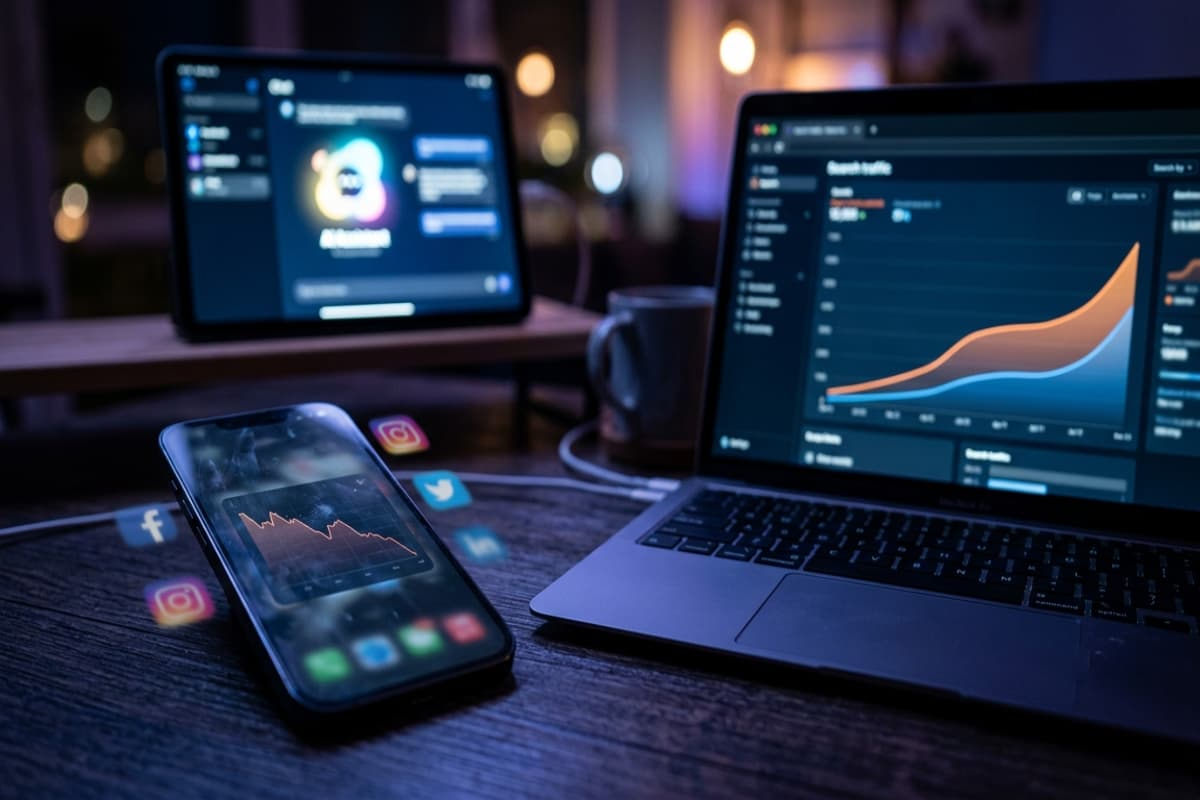
The anti-website argument got stronger in one way: the free layer improved. Google Business Profiles do more (booking, messaging, products), Instagram is a storefront, WhatsApp Business handles catalogs and quick replies. A motivated owner can assemble a functional presence from rented pieces, for free, in a weekend.
But three shifts quietly moved the other way, and they are bigger. First, organic social reach kept collapsing - a Facebook page post typically reaches a low single-digit percentage of your own followers; Instagram is not far behind. The audience you "built" on rented land is increasingly behind a paywall called ads. Second, buying research stayed on search: the overwhelming majority of consumers - commonly cited around 81% - research online before a significant purchase, and that research happens on Google and now inside AI assistants, not in your Instagram grid. Stanford's credibility research still holds too: 75% of users judge trustworthiness from web design, and "no website at all" is itself a design judgment - one of the silent credibility leaks I documented in how websites lose customers. Third - the new one - AI became a front door. When ChatGPT, Gemini or Copilot recommend a business, they draw on crawlable web data: your site's structure, content, reviews and consistency across the web. A business with no website gives AI systems almost nothing to verify or recommend. That is the same entity-building logic behind schema markup and why sites do or don't surface on Google - except now it decides AI answers too.
Social Media vs Website: What Each Actually Does
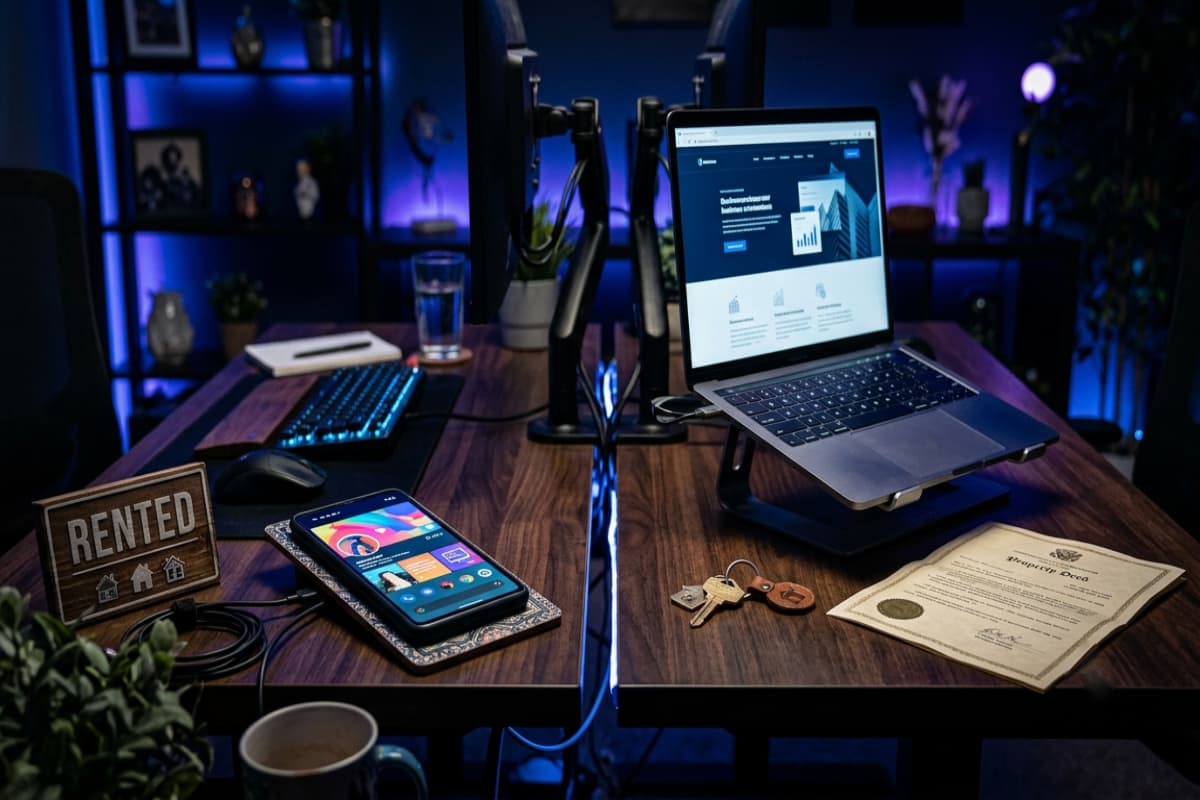
The either/or framing is wrong - they are different tools with different jobs, and the businesses that win use them as a system:
- Social media is discovery and relationship. It puts you in front of people who were not looking for you, keeps you in memory, shows personality and proof-of-life. It is rented: the algorithm decides reach, the platform owns the audience, and an account ban or algorithm change can erase years overnight.
- A website is verification and conversion. It is where the interested person lands to answer: is this business legit, what exactly do they offer, what does it cost, how do I buy? It is owned: your domain, your content, your leads, your rules - and it compounds through search equity instead of resetting with every post.
- The Google Business Profile is the bridge - free, powerful for local discovery, but still rented and still thin: it cannot hold your full story, portfolio, pricing logic or lead capture. Profiles with websites behind them also convert measurably better, because the profile wins the click and the website closes it.
The practical pattern: social posts create the moment of interest, the website converts it into an inquiry, and your list/CRM keeps it - the exact pipeline from my guide on turning website visitors into leads, with the follow-up half covered in the small business CRM guide. Remove the middle piece and interest leaks out between the post and the DM.
7 Signs You Have Outgrown Social-Only
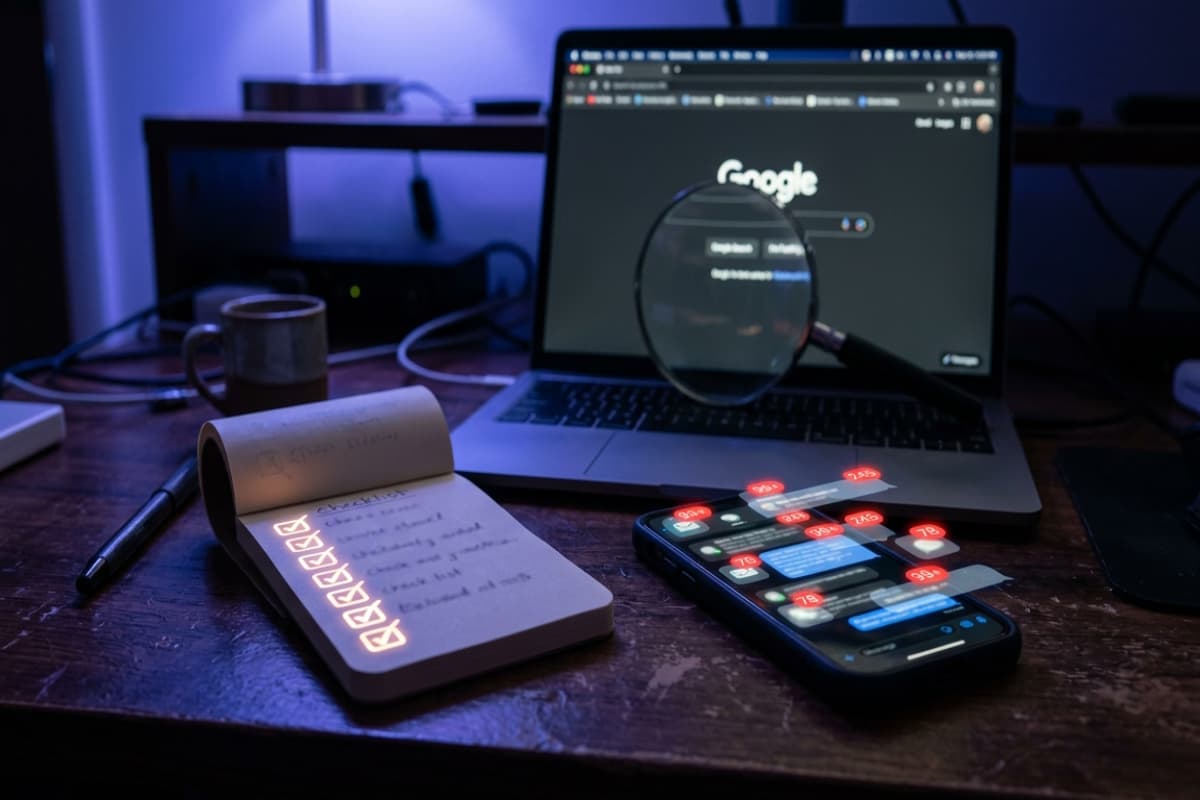
- 1People Google your business name. If customers search for you and find only third-party listings - or a competitor - you are losing the highest-intent traffic that exists: people already looking for you.
- 2Your service needs explanation or trust. Anything above impulse price - services, B2B, custom work - gets researched. A grid of posts cannot answer comparison questions; a services page with proof can.
- 3You repeat the same answers in DMs daily. Pricing, process, availability, FAQs - a website answers them at 3am without you, and qualifies leads before they ever message.
- 4You want customers beyond your followers. Search traffic is strangers with intent; social reach is followers with idle attention. Growth past your bubble runs through Google - and through content that ranks, which needs a home.
- 5Ads are getting expensive. Sending paid clicks to an Instagram profile wastes them; landing pages convert multiples better. The moment you spend on ads, the missing website starts charging you a tax on every click.
- 6You are building something sellable. A business that lives entirely in a personal Instagram account is hard to value, hand over or sell. Owned digital assets - domain, site, list, search equity - are balance-sheet items; follower counts are not.
- 7An algorithm change already hurt you once. If a reach drop or account issue ever cut your inquiries overnight, you have personally experienced the difference between renting and owning. Most owners only need that lesson once.
What Kind of Website You Actually Need (Do Not Overbuild)
The follow-up mistake to "no website" is buying too much website. Match the tool to the stage: a one-page landing site (your story, services, proof, one contact path) genuinely covers a small local service business - built in days, not weeks. A 5-7 page business site with dedicated service pages and a few proof pages is the standard for anyone competing in search, because each service page is a door Google can rank - the silo structure every serious service business uses, and the format behind most of the business sites in my portfolio. A full build with booking, e-commerce or client portals is for validated businesses automating real volume. The costs and timelines for each tier are broken down honestly in my 2026 website cost guide and the realistic timeline guide - most small businesses land in the $500-2,000, 2-6 week range, not the five-figure horror stories.
And yes - AI builders exist and are genuinely fine for the validation stage; I wrote an honest comparison of AI website builders vs hiring a developer including exactly when the cheap option is the right option. The short version: builders buy you existence, professionals buy you rankings, conversion and ownership. Choose by what the website's job is.
The Ownership Argument (the Part That Ages Best)
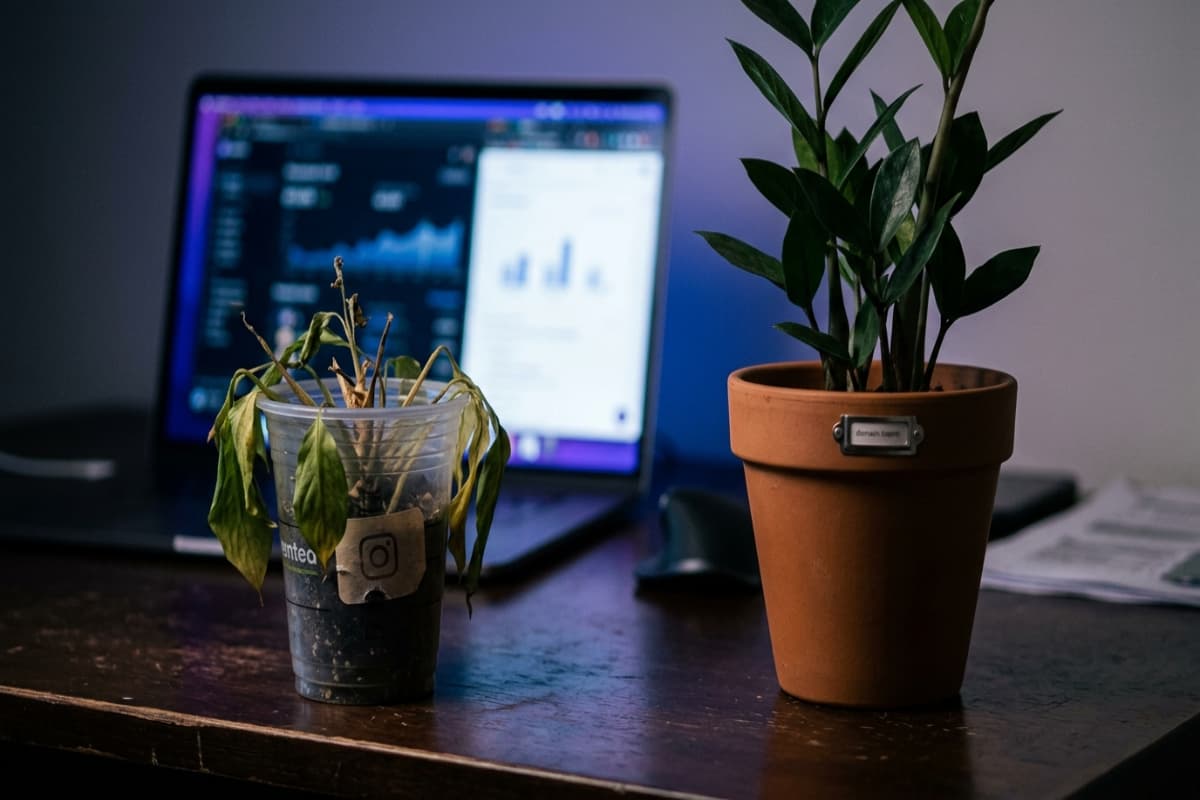
Strip away every tactical point and one strategic fact remains: everything on social media is rented, and the rent keeps rising. Reach declined every year for a decade; platforms rose and fell (ask anyone who built on Twitter); accounts get restricted by mistake with no appeal that works. Meanwhile a website with five years of content, accumulated search equity, an email list and consistent reviews is an asset that compounds - each article, each ranking, each backlink adds to something you own. One of these curves goes up over time and one goes down; the businesses that struggle in 2026 are usually the ones that spent five years feeding only the declining curve. Diversification is not a marketing buzzword here - it is just not building your house on someone else's land.
Do You Need a Website? FAQs
Can Instagram really replace a website for a small business?
For discovery, partially; for verification and conversion, no. Instagram reaches people who were not looking for you, but researchers - the people about to spend money - check Google, and increasingly ask AI assistants. If your business survives on walk-ins and DMs today, Instagram plus a complete Google Business Profile can carry you; the ceiling appears exactly when you try to grow past your existing audience.
Is a Google Business Profile enough without a website?
It is the single best free asset for a local business and you should complete it either way. But it is thin - a few photos, limited text, no service depth, no lead capture, no content that ranks - and it is still rented from Google. Profiles backed by real websites convert better and rank better, because the profile and the site verify each other.
What does a basic business website cost in 2026?
A professional small business site typically runs $500-2,000 one-time at freelancer rates, plus minimal hosting. DIY builders run $10-49/month forever with real ceilings. The three-year math usually converges - the difference is that one path ends with an owned asset and the other with a cancelled subscription. Full breakdown in the cost guide linked above.
I sell locally only - does a website still matter?
Local is actually where search intent is strongest: nearly half of Google searches have local intent, and most "near me" searchers act within a day. A local business with a fast site, real service pages and local schema competes for all of that; a social-only business competes for none of it. Local is an argument for the website, not against it.
When is the right time to build one?
When any of the seven signs above appear - people Googling your name is the loudest one - or before a growth push (ads, new market, price increase) where trust and conversion suddenly matter. The wrong times are "never" and "before the business itself is validated." If you are in between, start small: a one-page site this quarter beats a perfect site never.
So - do you still need a website in 2026? If your customers find you, trust you and buy from you entirely inside one app, honestly: not yet. For everyone else, the question quietly answered itself while the tools changed: search still carries the buyers, AI assistants recommend from web data, social reach keeps shrinking, and ownership keeps compounding. If you recognized your business in the seven signs, the next step is not a big commitment - it is a conversation. Send me what you do through the contact page and I will reply within 24 hours with an honest written recommendation: what kind of site your stage actually needs (including "none yet" if that is true), a fixed quote and a realistic timeline. No calls, no pressure - the same honesty as this article, applied to your business.
Written by
Ali Rehman - Full Stack Developer
I build fast, scalable web applications with React, Next.js, Node.js & TypeScript. Have a project in mind? Send me a message and get a written plan with a fixed quote - start here.
More articles by Ali Rehman →