
Indexloom Audit.
Turn an issue list into an understandable next step.
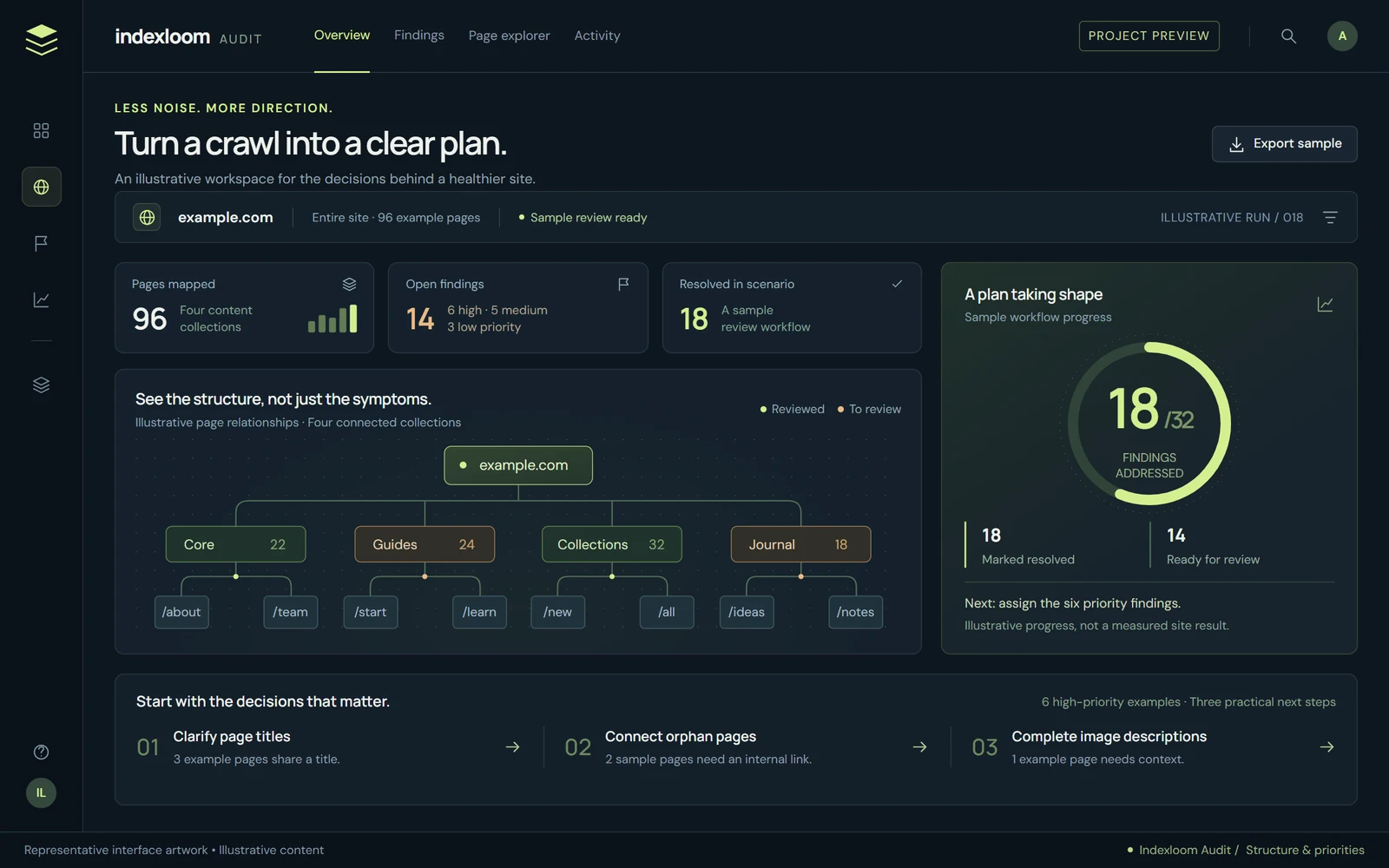
A completed personal SEO-audit application project focused on organising findings, affected pages and follow-up work in an explainable dashboard.
- Project type
- Independent personal build
- Project focus
- SEO audit dashboard development
- Presentation
- Two representative interface visuals
- Viewing mode
- Portfolio case study
A clear purpose.
A considered build.
The challenge
A long list of website issues is difficult to act on when severity, affected pages and context are disconnected. A single score can hide the work needed instead of helping a site owner make a decision.
The approach
Indexloom structures the case study around audit overview and finding detail. Each representative finding has context, an affected-page reference and a proposed response. The portfolio explains this workflow without presenting sample counts as an actual client audit or a ranking result.
Who the experience is for
Freelancers and small website teams reviewing technical findings. Reserved example domains and synthetic findings keep private client audits out of the showcase.
Real development experience. Independent projects.
I have built client websites and web applications as part of an agency team. Those deliveries are separate from the independently branded projects shown here; client code, screenshots and private data are not reused.
A closer look at the project.
Explore the next screen below, or open the gallery to browse all project previews.
Prioritised findings
Illustrative interface · Sample content
The journey,
step by step.
The key experiences and information decisions covered by this case study.
Orient the review
The overview introduces the site-review context and groups findings so the next investigation is easier to identify.
Understand a finding
Issue detail pairs a descriptive label with an affected example URL and an explanation, rather than asking a user to act on an unexplained number.
Organise follow-up
The case study connects findings to next actions. It does not offer a public scan, publish client domains or promise that resolving a sample issue improves rankings.
More than a
different colour palette.
An ink-dark navigation area frames a pale analytical workspace with restrained lime highlights. The visual hierarchy gives finding labels and their explanation more weight than decorative scores. The overview and detail views share a consistent language for priority and follow-up.
Explain the priority
Severity is accompanied by context. A dashboard should help someone decide what to investigate rather than substitute a score for judgement.
Keep examples independent
Portfolio findings use reserved example domains and invented records, not copied competitor dashboards or customer reports.
Separate findings from outcomes
An interface can present technical checks without claiming search traffic, crawl accuracy or business impact that has not been measured.
The work.
And its context.
This case study presents the project's purpose and interface decisions without requiring a public demo or account access.
These describe the work's subject and design priorities, not a list of unverified technologies or integrations.
- 01SCOPE & CONTEXT
Completed personal application project with an audit-focused interface.
- 02SCOPE & CONTEXT
The public portfolio is not an online crawler or a free scan endpoint.
- 03SCOPE & CONTEXT
Sample counts and trends are illustrative, not measured SEO performance.
- 04SCOPE & CONTEXT
Crawl coverage, provider integrations and production security are outside the evidence shown here.
About this project.
Personal implementation, representative visuals and live access are separate things. The case study makes that distinction explicit.
Is this project completed, and can I open the live site?
This is a completed personal project. The public page is a case study, not a live application demo. Live-site URLs, account logins and source-code links are intentionally not published.
How is the project credited?
This is an independent personal implementation by Ali Rehman, presented as a personal case study rather than a client engagement.
What do the project visuals show?
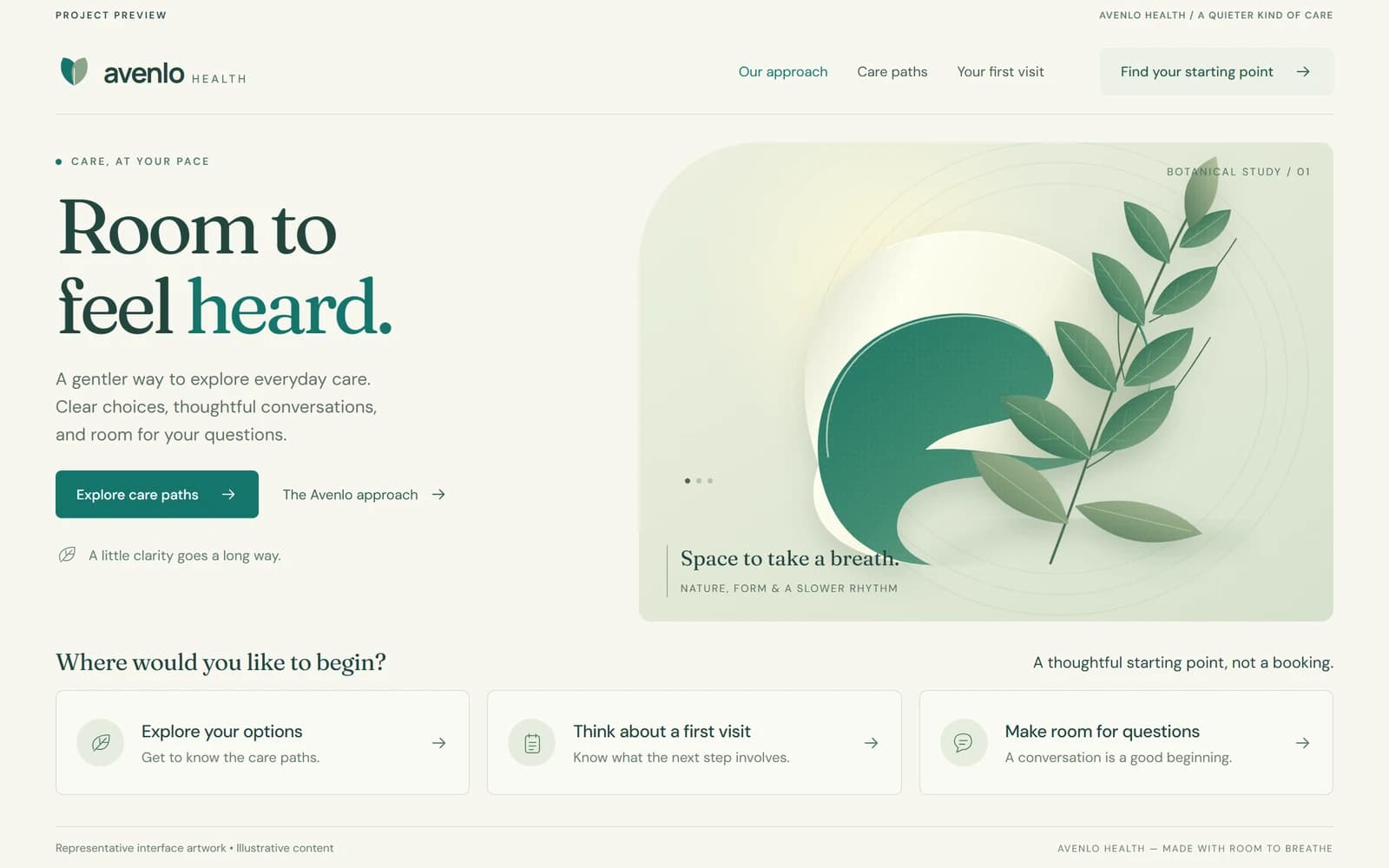
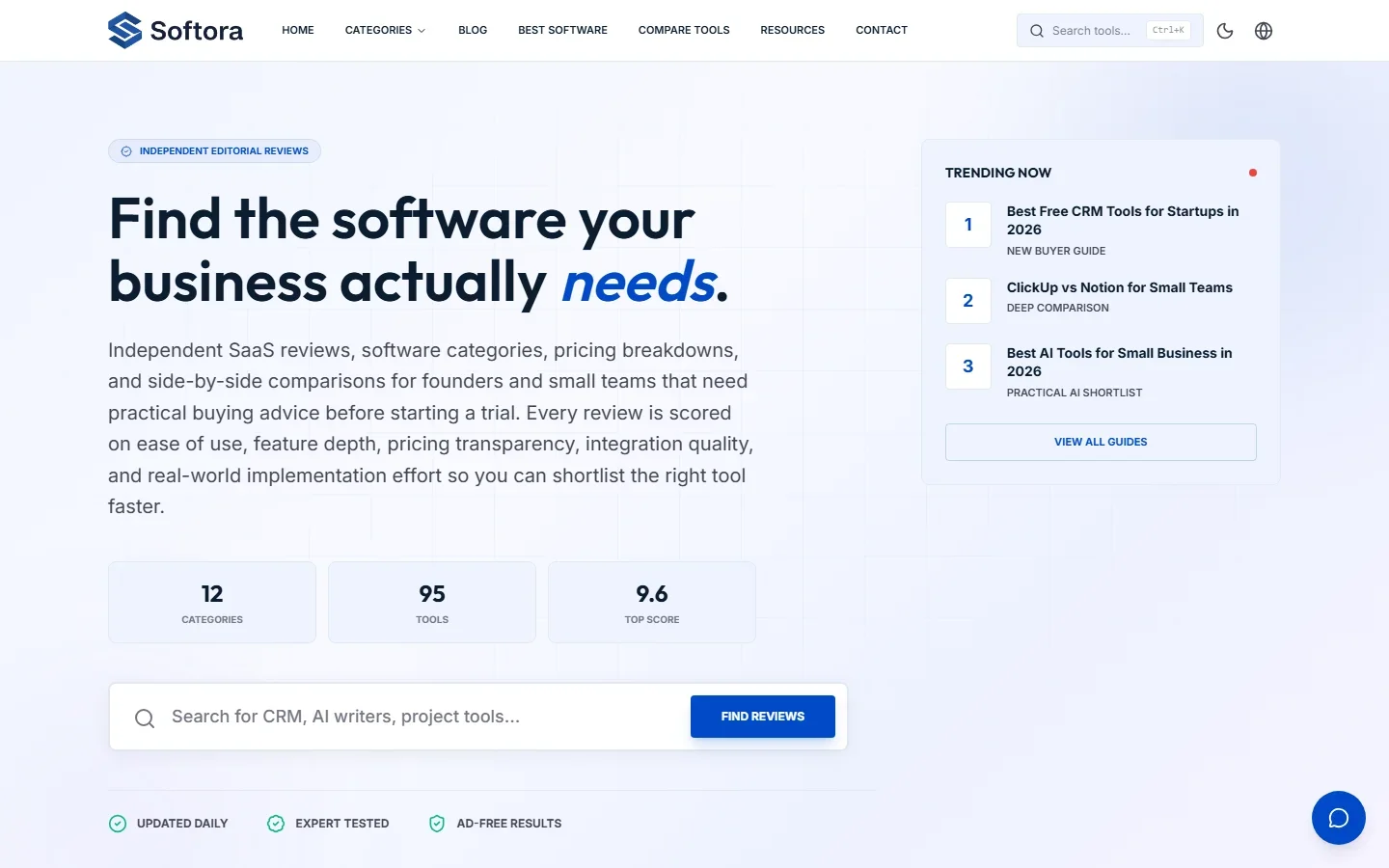
Representative interface artwork with illustrative content, retained from the design process. These visuals are not screenshots of the finished application or evidence of production results.
Can we discuss a similar project?
Yes. Use the contact page to describe your requirements. Any new work would have its own scope and original implementation; client code, confidential data and proprietary assets are not shared.
Planning something similar?
Explore the relevant service scope and a practical planning guide before describing your requirements.
Keep exploring.
All personal projects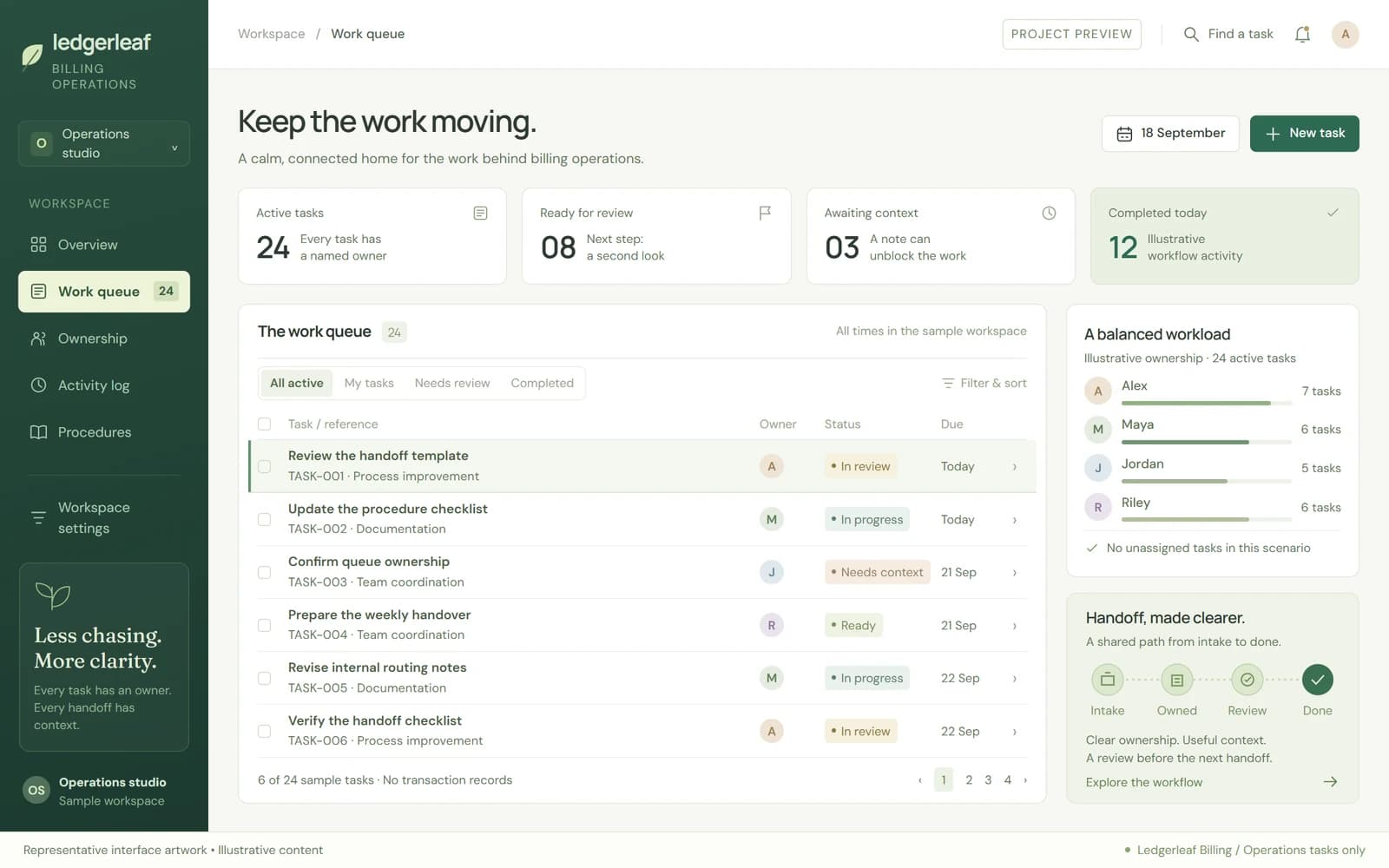
Have a project in mind?
Let's discuss an original build around your requirements—not reuse an employer's work.
All previews stay inside this portfolio.