
WordPress vs Custom Website: Which Is Right for Your Business? (2026)
Should you build on WordPress or invest in a custom website? An honest, jargon-free comparison of cost, speed, SEO, security and scalability - and exactly when to choose each.
 Ali RehmanFull Stack Web Developer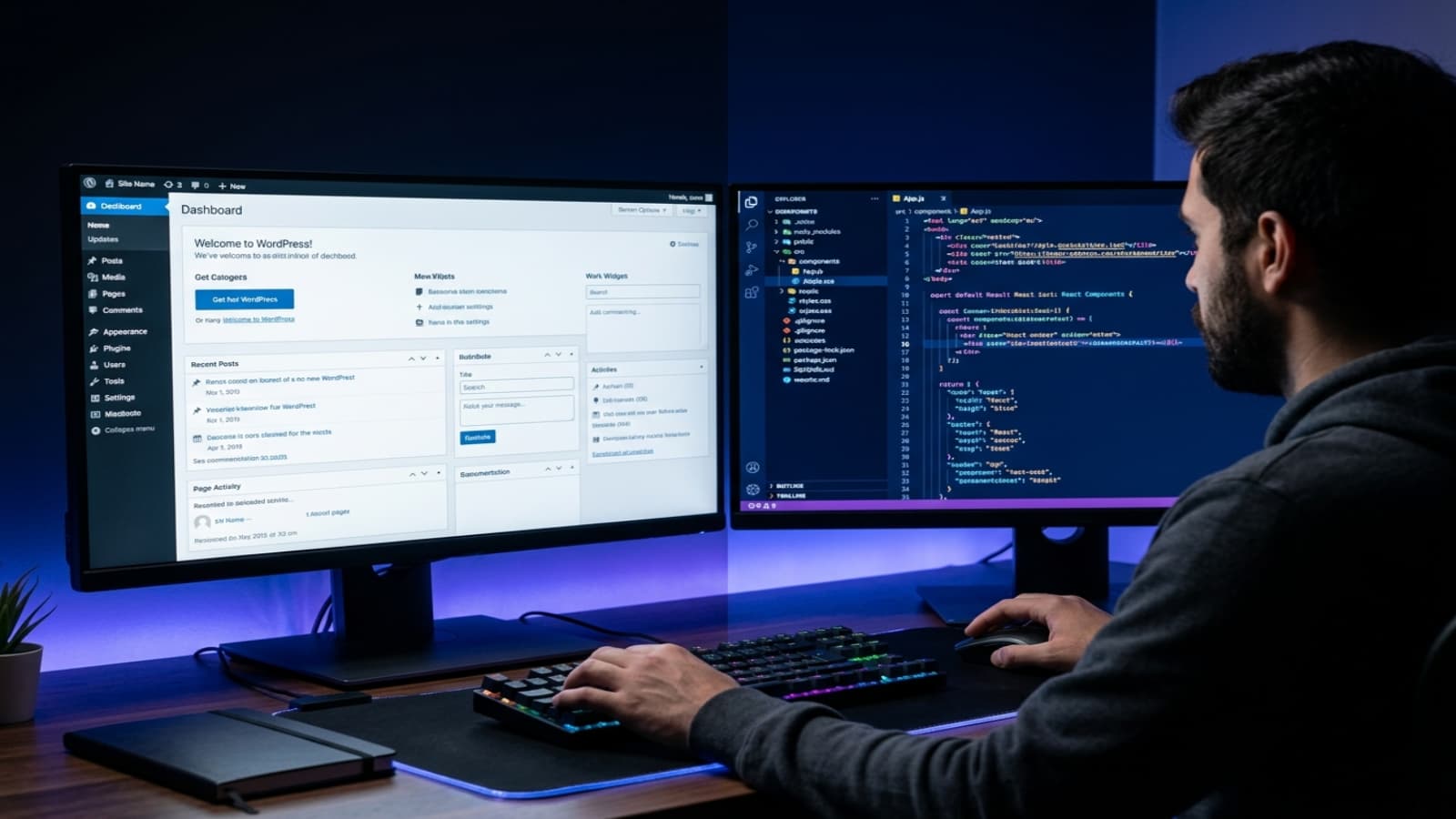
On this page 12 sections
“Should I use WordPress or get a custom website built?” It’s one of the first questions every business owner faces - and the answer shapes your budget, your loading speed, your Google rankings, and how easily you can grow later. The trouble is that most advice is biased: WordPress agencies swear by WordPress, and developers push custom code. This guide is different, because I build both. Here’s an honest, jargon-free comparison to help you choose what’s genuinely right for your business in 2026.
Two related reads will help you frame the decision: my guide to how much a website costs in 2026 and how to hire the right web developer. And if you already know roughly what you need, you can see both options on my services page - I offer WordPress development and fully custom builds, so I have no reason to sell you one over the other.
First, what do these terms actually mean?
A lot of confusion comes from fuzzy definitions, so let’s be precise before we compare.
What is WordPress?
WordPress is a content management system (CMS) that powers roughly 40% of all websites on the internet. You build your site from themes (ready-made designs) and plugins (add-on features), then manage everything through a familiar admin dashboard. It’s popular because it’s quick to launch, has an enormous ecosystem, and lets non-technical users edit their own content. WooCommerce - the most popular way to run an online store - is itself a WordPress plugin.
What is a custom website?
A custom website is built from the ground up with code - typically modern tools like React, Next.js, Node.js and TypeScript. Nothing is bolted on from a marketplace; every part is designed around your specific goals. That means total control over design, performance and features, and no dependence on third-party plugins that can slow you down or break. It’s the difference between a tailored suit and one off the rack. If you’re curious how these two stacks differ under the hood, my comparison of Next.js vs React in 2026 goes deeper.
WordPress: the advantages
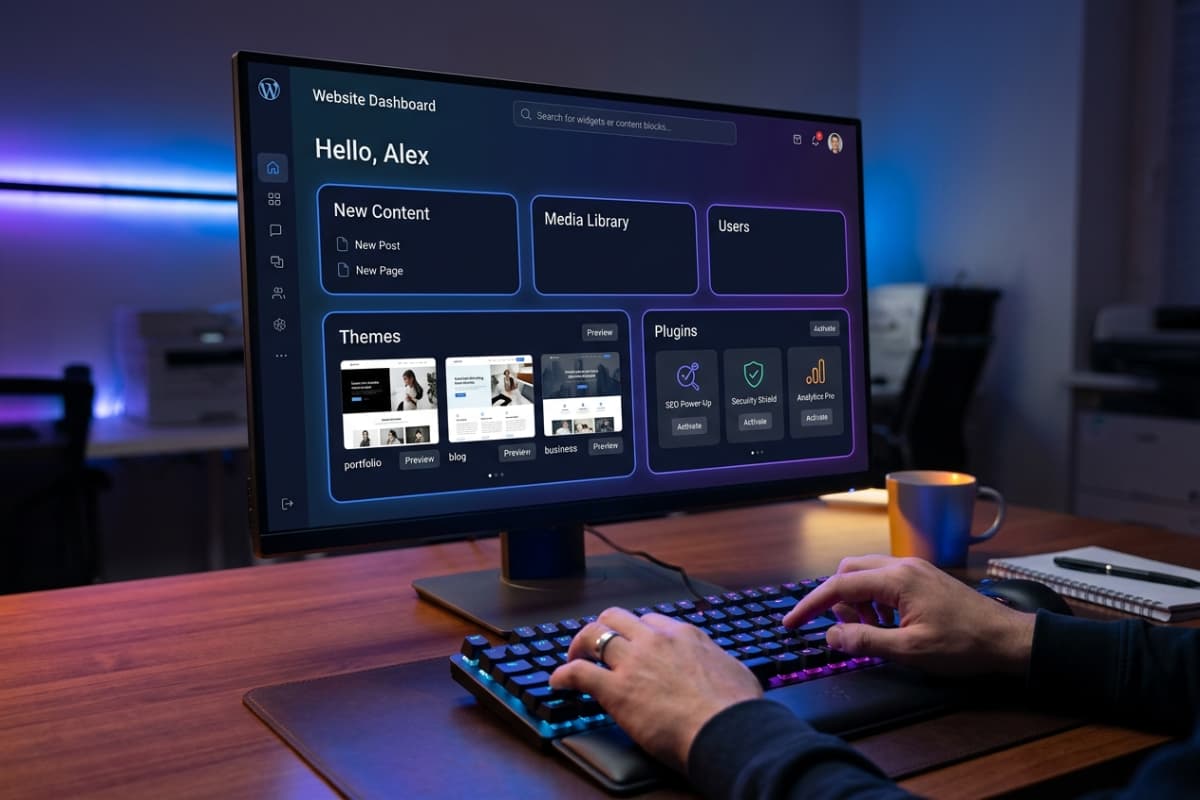
- Lower upfront cost - themes and plugins mean less is built from scratch.
- Fast to launch - a basic site can be live in days.
- Easy self-editing - a friendly dashboard non-technical owners can use.
- Huge ecosystem - a plugin exists for almost anything (SEO, forms, bookings, stores).
- Familiar to many - lots of people already know how to use it.
WordPress: the drawbacks
- Performance overhead - themes and stacked plugins often make sites slower unless carefully optimized.
- Security exposure - being the world’s biggest CMS makes it the biggest target; outdated plugins are a common way sites get hacked.
- Plugin dependency - one bad or abandoned plugin can break your site or create conflicts.
- Maintenance burden - themes, plugins and core all need regular updates.
- Generic look - template-based sites can end up resembling thousands of others.
Custom websites: the advantages
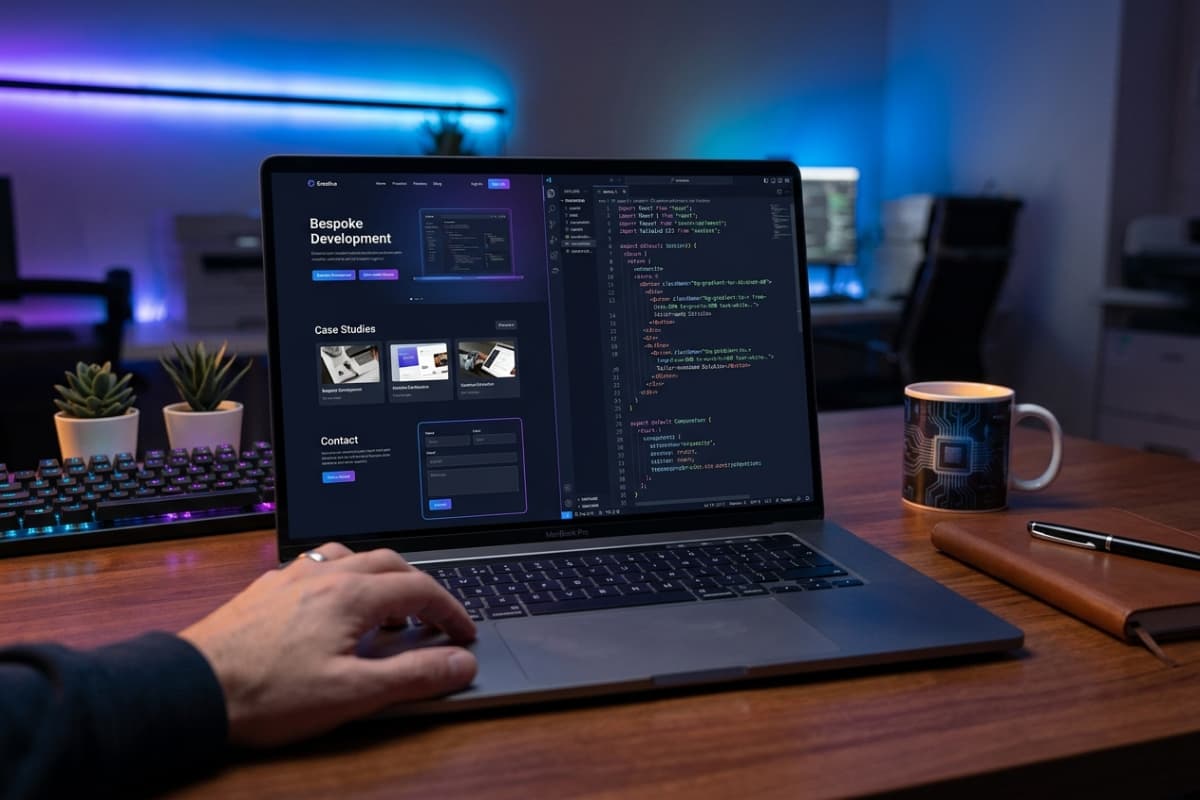
- Exceptional speed - only the code you need ships, so pages load fast (great for users and Google).
- A truly unique design - built around your brand, not a template everyone else uses.
- Stronger security - a smaller, controlled surface with no third-party plugin sprawl.
- Unlimited flexibility - any feature you can imagine can be built, exactly how you want it.
- Scales cleanly - clean code grows with your business instead of fighting it.
Custom websites: the drawbacks
- Higher upfront cost - you’re paying for bespoke engineering, not a template.
- Longer build time - quality custom work takes more time than assembling a theme.
- Needs a developer for big changes - though a good build includes a CMS for day-to-day edits.
- Not ideal for tiny budgets - overkill if you just need a simple brochure page today.
Head-to-head: the six things that actually matter
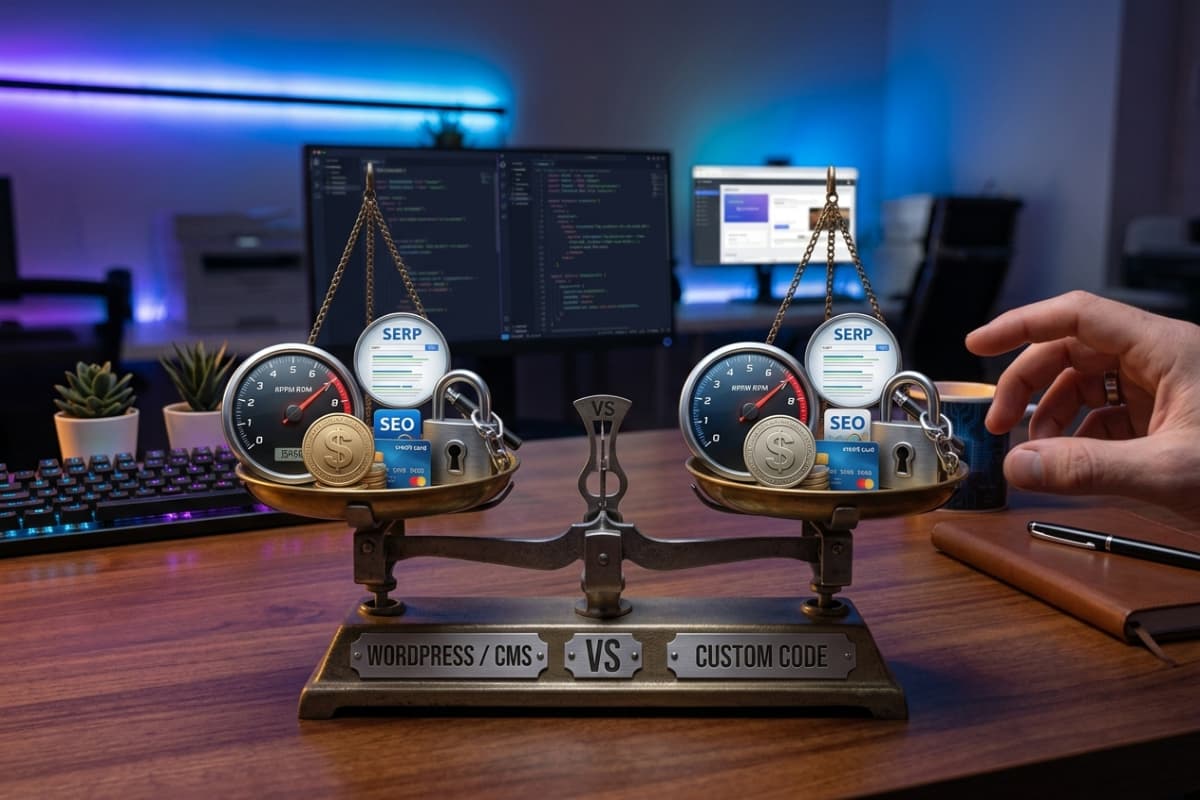
Forget the hype and focus on what affects your business. Here’s how the two approaches compare on the factors that genuinely move the needle.
1. Cost
WordPress usually wins on upfront cost, especially for simple sites. But look at total cost over a few years: plugin licences, premium themes, ongoing maintenance and the occasional emergency fix add up. A custom site costs more to build but often costs less to run and rarely surprises you with plugin bills. For real numbers on both, see my 2026 website cost breakdown.
2. Speed & performance
This is where custom builds shine. A modern custom site ships minimal code and can hit near-perfect performance scores, while a plugin-heavy WordPress site often struggles without careful tuning. Speed isn’t vanity - slow sites lose customers and rank lower, one of the seven problems I cover in 7 signs your website is losing you customers. WordPress can be fast with the right hosting and discipline, but fast is the default for custom, and an exception for WordPress. (For the technical side, see my Next.js performance optimization guide.)
3. SEO
Both can rank well - SEO is more about content, structure and speed than platform. WordPress has excellent SEO plugins (like Yoast) that make the basics easy. Custom sites give you total control over technical SEO, structured data and Core Web Vitals, with no plugin bloat dragging performance down. For most businesses it’s a tie on paper, with custom pulling ahead on the technical performance side.
4. Security
Custom sites are generally more secure by default: a smaller attack surface and no sprawling plugin list to keep patched. WordPress is perfectly safe when it’s well maintained, but it’s the world’s biggest target, and the most common breaches come from outdated plugins and weak configurations. If your site handles logins or payments, security rigour matters a lot - I explain the principles in my guide to secure authentication.
5. Flexibility & scalability
If your needs are standard (pages, a blog, a simple store), WordPress handles them out of the box. But when you want something unusual - a custom dashboard, a booking engine, an app-like experience, or a feature no plugin quite delivers - custom code has no ceiling. Custom also scales more gracefully as traffic and complexity grow.
6. Maintenance & editing
WordPress makes day-to-day content editing effortless, which owners love. The flip side is ongoing upkeep: core, theme and plugin updates that, if ignored, cause breakages or security holes. A custom site has far less to maintain, and a good build still includes a CMS so you can edit content yourself. Either way, I offer ongoing maintenance and support so you never have to worry about it.
When WordPress is the right choice
WordPress is a smart, cost-effective pick when:
- You need a content-heavy site or blog and want to publish and edit constantly yourself.
- Your budget is tight and you need to launch quickly.
- Your requirements are fairly standard and well served by existing plugins.
- You’re running a straightforward WooCommerce store.
When a custom website wins
A custom build is the better investment when:
- Speed and a flawless user experience are critical to your business.
- You want a distinctive design that stands apart from competitors.
- You need custom features, dashboards, or integrations no plugin covers.
- You’re building something you expect to scale significantly.
- Security and reliability are top priorities (logins, payments, sensitive data).
The middle ground: headless WordPress
You don’t always have to choose. Headless WordPress uses WordPress purely as the content editor your team already loves, while a fast, modern front-end (built with Next.js) renders the actual site. You get WordPress’s friendly editing experience and custom-level speed and design. It’s more involved to set up, but for content-driven businesses that also want top performance, it’s often the ideal compromise - and it’s something I build as part of my WordPress and custom development services.
A quick way to decide
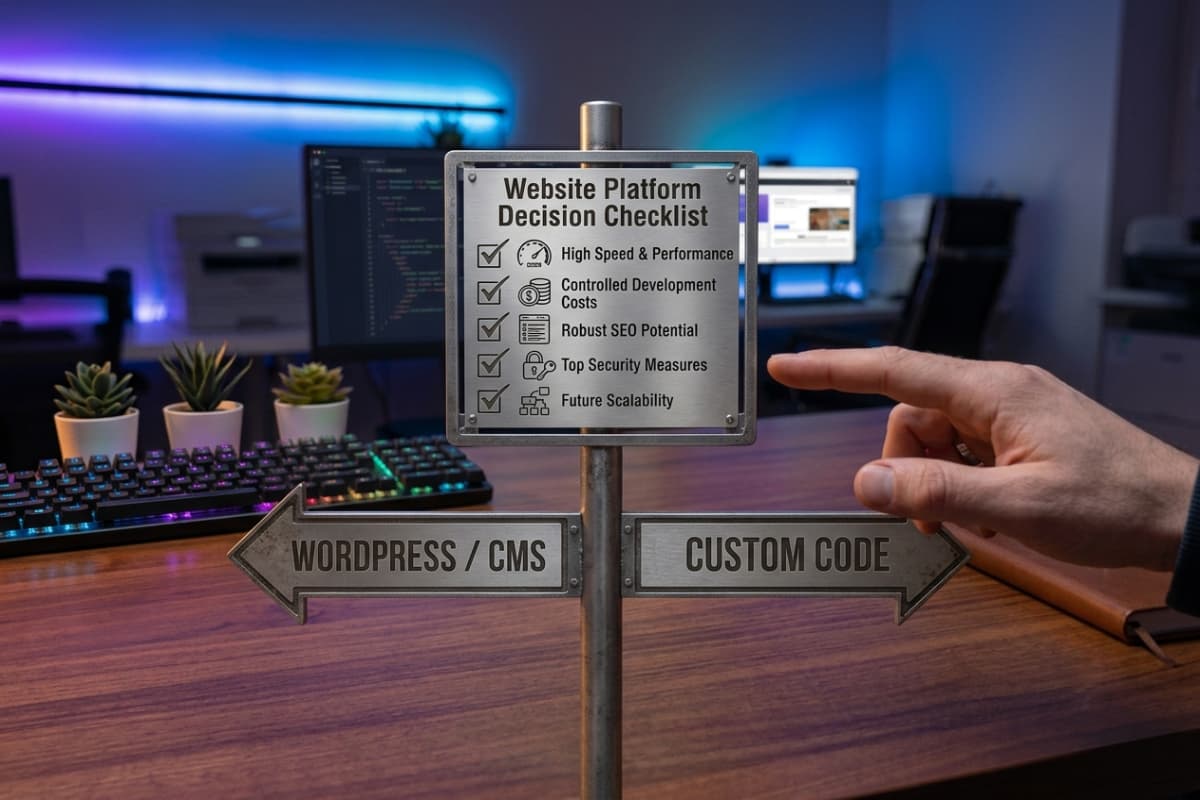
If you’re short on time, run through these questions - the more you answer “yes,” the more a custom build makes sense over WordPress:
- Is your website a primary source of leads or revenue (not just an online business card)?
- Do you need it to be genuinely fast and rank aggressively on Google?
- Do you want a design that looks nothing like your competitors?
- Will you need custom features or integrations that go beyond standard plugins?
- Do you expect to scale - more traffic, more features - over the next few years?
Mostly “no”? WordPress will serve you well and save you money. Mostly “yes”? A custom build (or headless WordPress) is the smarter long-term investment. Still unsure where you land? That’s exactly the kind of thing I’ll help you think through - honestly - on my contact page.
My honest recommendation
There’s no universal winner - there’s only what’s right for you. If you’re a small business that needs to launch affordably and manage your own content, WordPress is a sensible start. If performance, a unique brand, custom functionality or long-term scale matter, a custom build pays for itself. And if you want the best of both, headless WordPress bridges the gap. The key is choosing deliberately, not defaulting to whatever a single vendor happens to sell. Not sure which fits? Tell me about your project on my contact page and I’ll give you an honest recommendation - even if that’s the cheaper option.
Frequently asked questions
Is WordPress good for SEO?
Yes. With a good theme, an SEO plugin like Yoast, and fast hosting, WordPress ranks perfectly well. SEO success depends far more on content quality, site structure and speed than on the platform itself - so keep an eye on performance, since plugin bloat can hurt rankings.
Is a custom website worth the extra cost?
If your website is central to your business - a real source of leads or sales - then usually yes. The speed, security, unique design and scalability tend to earn back the difference. For a simple brochure site on a tight budget, WordPress is the more sensible spend. My cost guide breaks down the numbers.
Can I move from WordPress to a custom site later?
Absolutely - it’s a common path. Many businesses start on WordPress and migrate to a custom build once they outgrow it, keeping their content and search rankings intact. I handle exactly this kind of website redesign and migration without losing your SEO.
Which is more secure, WordPress or a custom website?
A custom site is generally more secure by default because it has a smaller attack surface and no plugins to keep patched. WordPress is safe when properly maintained, but most WordPress breaches trace back to outdated plugins or weak configuration.
Still weighing it up? Whether you lean toward WordPress, a fully custom build, or a headless hybrid, I can help you choose and build it - everything in writing, with a fixed quote and no calls required. See my web development services, browse some recent work, or send me a message. And if you’re early in the process, start with how much a website costs and how to hire the right developer.
Written by
Ali Rehman - Full Stack Developer
I build fast, scalable web applications with React, Next.js, Node.js & TypeScript. Have a project in mind? Send me a message and get a written plan with a fixed quote - start here.
More articles by Ali Rehman →